Is Omada for Cholesterol a standalone program or a part of existing care?
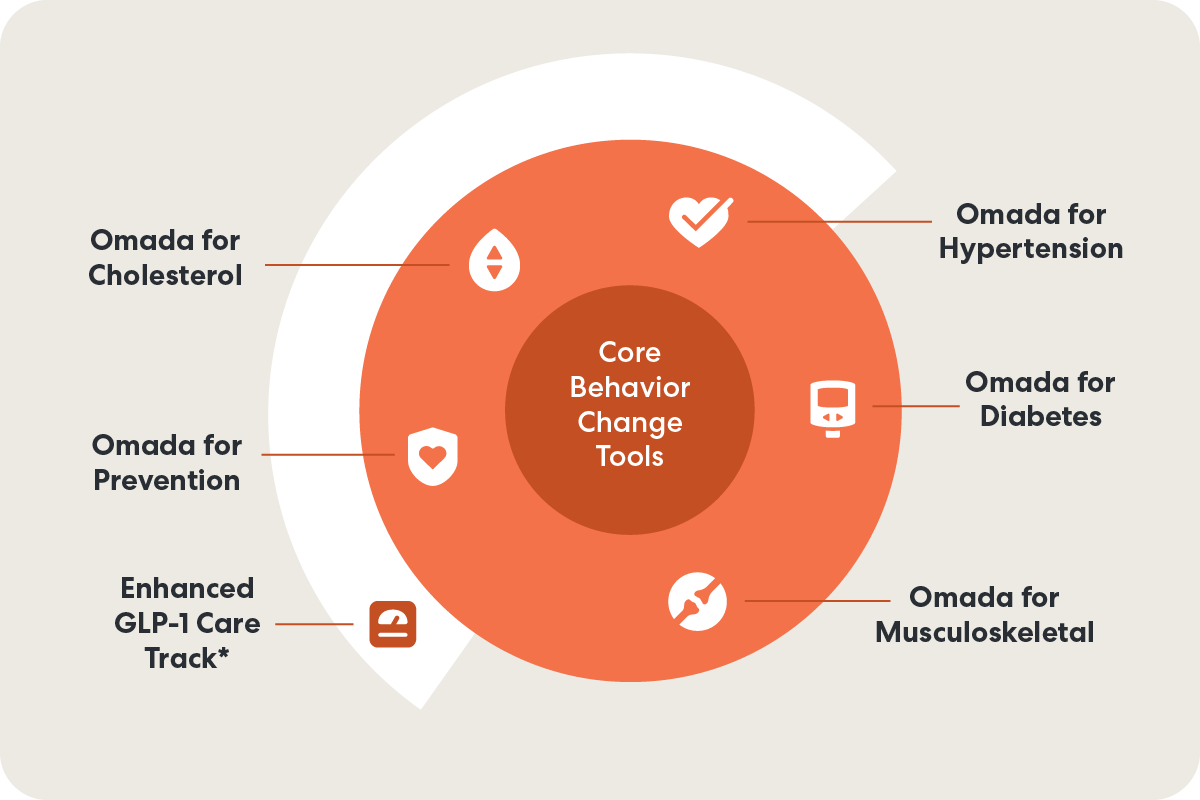
Starting in 2027, Omada for Cholesterol will be a standalone program that can be offered on its own or alongside other Omada cardiometabolic programs, including Diabetes, Hypertension, and Prevention & Weight Health. It is built on Omada’s shared behavioral and data platform, while delivering condition-specific cholesterol support.
How does cholesterol support integrate with Omada’s broader cardiometabolic approach?
Cholesterol support is designed to reflect how lipid risk evolves alongside other cardiometabolic risks over time. Members receive a coordinated experience that combines behavior change tools, guided programs, education, and support from a specialized care team. Everything works together to support their overall health, rather than focusing on just one area, like cholesterol.
Is this an enhancement to hypertension or a distinct clinical focus?
Cholesterol is a distinct clinical focus with its own learning paths, goals, tracking, and specialist oversight. While it may complement hypertension and other Omada programs, it is not a variation of existing care.
Is specialist oversight included?
Yes. Cardiometabolic specialist oversight is built into the care model, consistent with Omada’s hypertension and diabetes programs. Care teams with a CDCES as a specialist, are trained to support high cholesterol and sustain lipid control.
Does Omada for cholesterol support members on lipid-lowering medications?
Yes. Members can track self-reported medications and lab values, and receive education and coaching support aligned with their care plan from their doctor. The program is designed to complement a member’s prescribing clinician.
What clinical populations are eligible for the cholesterol program?
Eligibility is based on clinical criteria for dyslipidemia or elevated cholesterol. Omada’s cholesterol program may be offered to members enrolling specifically for lipid management or to members already engaged in other Omada cardiometabolic programs.
What does the member journey look like for Omada’s cholesterol program?
Members progress through outreach, enrollment, cholesterol-specific onboarding, and ongoing program engagement. The experience includes structured learning paths, SMART goals, tracking, coaching interactions, and community participation.
How is cholesterol risk made actionable for members?
The program focuses on helping members act on their lipid risk through everyday behaviors: education, nutrition guidance, activity support, goal setting, and lab awareness.
Does the program address behavior beyond diet?
Yes. Cholesterol support integrates behavior change tools spanning food, physical activity, medication adherence, and education—recognizing that lipid management is influenced by multiple daily behaviors.
Are there communities or peer support for cholesterol members?
Yes. Members can participate in topic-based communities and kickoff groups designed to reinforce learning, motivation, and sustained engagement.
How does Omada evaluate success for cholesterol support?
Omada anticipates engagement patterns consistent with existing cardiometabolic programs.
Early cholesterol engagement is expected to demonstrate participation and improvements in health behaviors that support lipid management over time.
How will cholesterol outcomes be reported?
As reporting becomes available at sufficient scale, clients will receive aggregated enrollment, engagement, and outcomes reporting.
Does adding cholesterol support create operational complexity for existing clients?
No. Cholesterol support is delivered within Omada’s existing platform and care model, without adding operational complexity for existing clients.