As the GLP-1 conversation evolves, Omada Health is updating its industry FAQs to deliver timely data and insights for virtual care buyers.
Our previous guides addressed new indications and their impact on employers and payers, as well as early outcomes of Omada’s Enhanced GLP-1 Care Track.
This guide addresses a reigning industry dilemma: though GLP-1 costs are declining, demand continues to rise. How can organizations manage the costs?
A popular industry solution has been to off-ramp patients as soon as possible to relieve payers of short-term prescription costs. However, recent data from Omada Insights Lab’s ANSWERS Initiative suggests that medication persistence, rather than early discontinuation, is key to GLP-1 cost containment and ROI.
Read on for the latest research on how Omada’s Enhanced GLP-1 Care Track can drive favorable health outcomes and decrease financial waste.
GLP-1 Persistence is Crucial for Outcomes and ROI
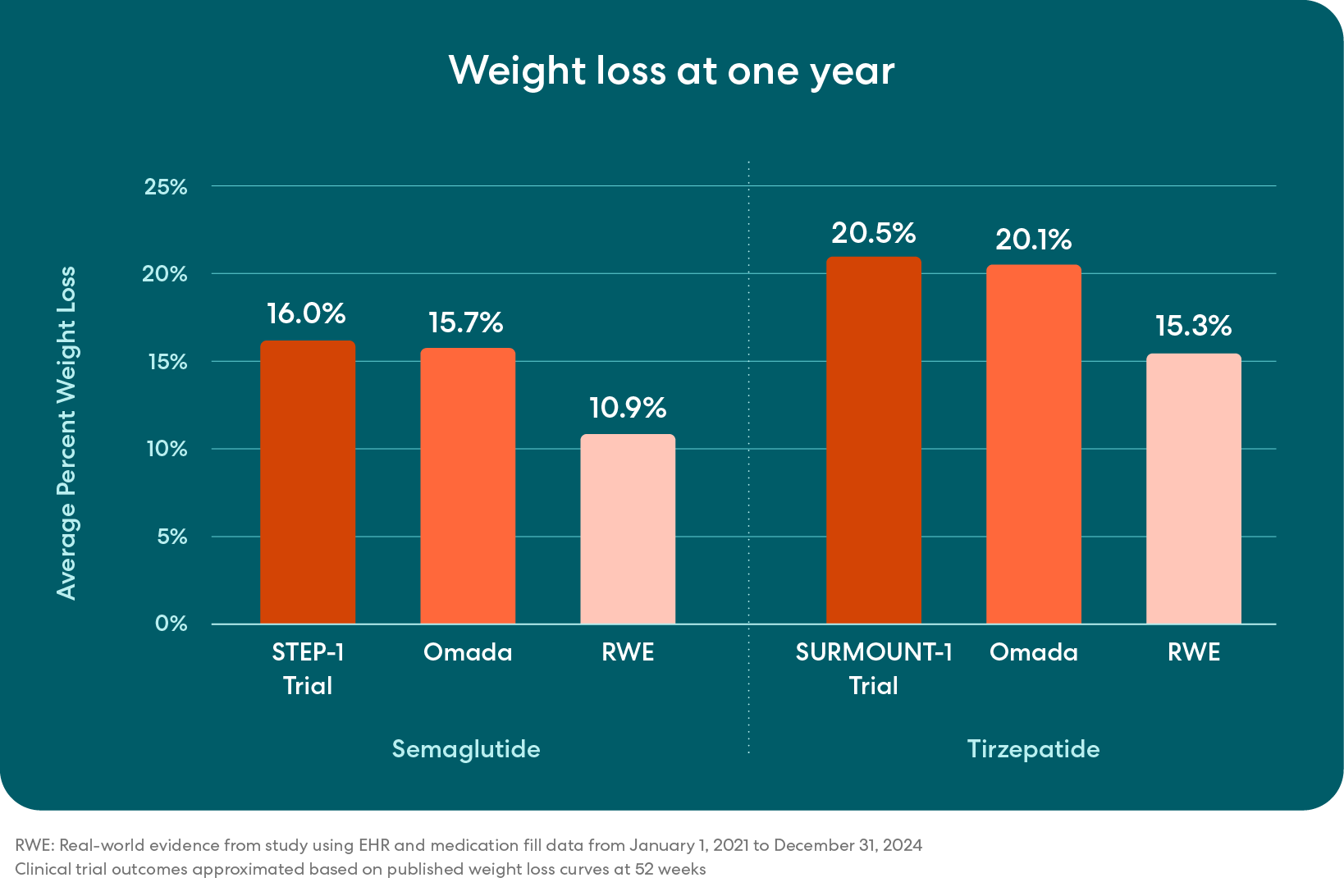
- 67% of Omada members were persistent on their medication at one year and experienced weight loss comparable to clinical trials
- Average weight loss at one year in the program was 18.4% for members persistent on medication and 13.1% for members who discontinued before one year
- In terms of engagement, members completed more than 10 actions a week on average
This data suggests that providing the right kind of support to promote GLP-1 persistence can help patients achieve clinical trial-level weight loss, setting the stage for cardiometabolic disease risk reduction.
Enhanced GLP-1 Care Track: Five Pillars of Support

Care Team
Dedicated care team right-sized for GLP-1 companion care.
- Health Coach
- Cardiometabolic Specialist
- Exercise Specialist
- Behavioral Health Specialist1

Activity
Enhanced exercise support integrating 10 years of digital MSK expertise.
- Targeted exercise plans
- Muscle building focus
- Interactive animated exercise demonstrations
- Dedicated Exercise Specialist2

Education
Specialized GLP-1 curriculum to support self-education.
- Selection of GLP-1 learning paths
- Lessons picked for each member
- Custom goal setting
- CDCES-led peer communities

Persistence
Targeted support to overcome common barriers to medication persistence.
- Side effect management
- Injection guidance
- Medication access support
- Lifestyle tips while titrating or tapering medication

Nutrition
New food innovations to support GLP-1 members with nutritional adjustments.
- Prioritizing protein and nutrient dense foods
- Food coaching and real-time nutrition AI answers
- Responsive meal tracking
- Appetite and mindset tools
1 Care team assignments: Health coach - all cardiometabolic programs; Cardiometabolic specialist- Diabetes and Hypertension programs; Physical Therapist- Musculoskeletal program; Behavioral health specialist- all programs.
2 Exercise Specialists are assigned to members once they indicate via a standard PAR-Q assessment that it is safe to exercise.
When patients show low GLP-1 persistence or discontinue their medications early, they don’t achieve the weight loss needed to reduce their risk for cardiometabolic diseases, and payers face wasted spend and insufficient ROI.
Our data suggests that with Omada’s support, patients are able to persist on their medications to achieve meaningful weight loss, which improves outcomes and protects ROI.
Persisting on GLP-1s with the support of Omada’s Enhanced GLP-1 Care Track also facilitates healthy behavior change, paving the way for patients to maintain their health outcomes for the next step of their journey, whether it’s persisting on the therapy or PCP-advised discontinuation.
Persistence and Discontinuation: Two Sides of the GLP-1 Cost Equation
Data Shows 12–Month Weight Maintenance Post-GLP-1s
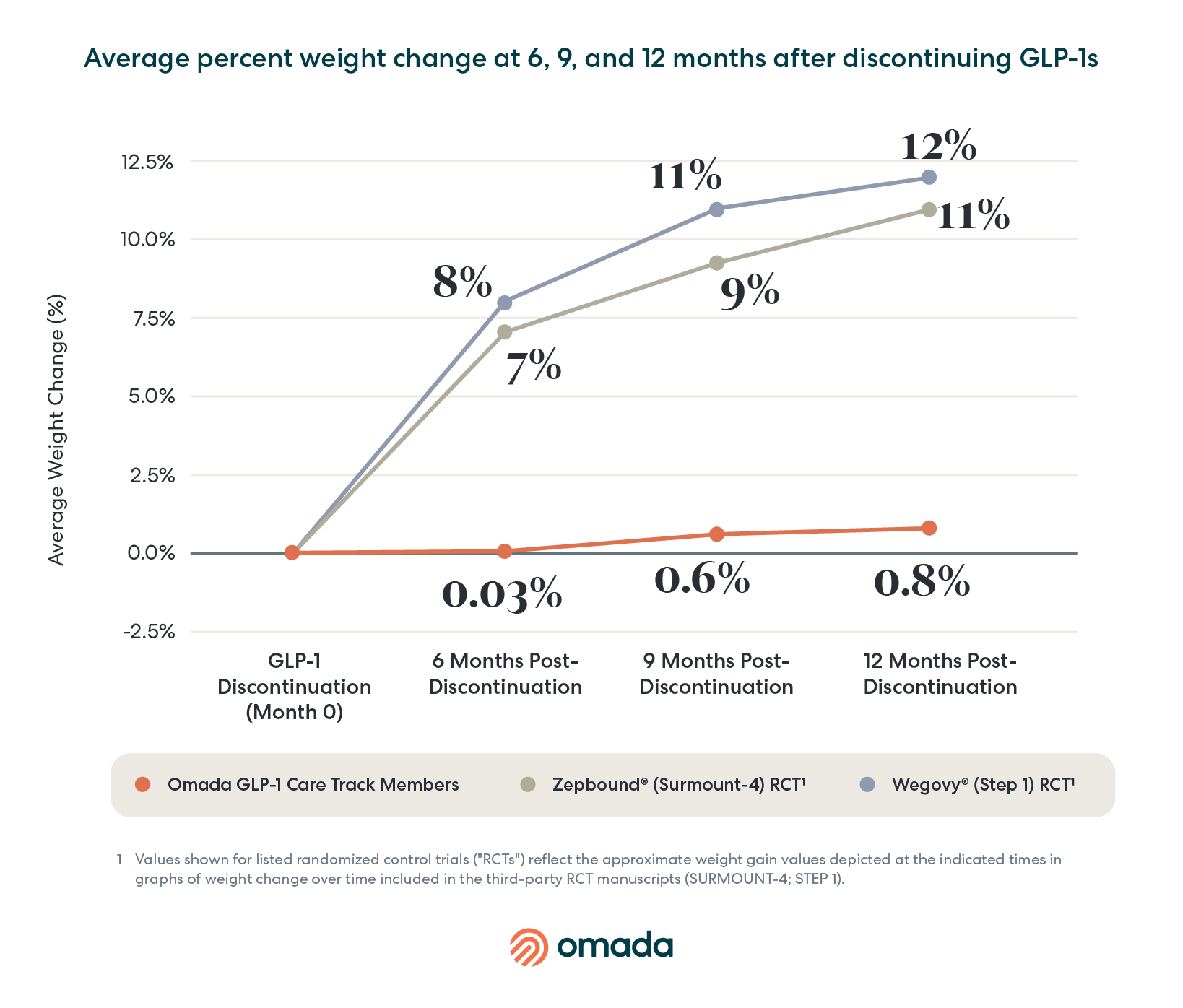
- At 12 months, Omada members largely demonstrated weight maintenance (0.8% average weight change), compared to patients regaining nearly half the weight back in clinical trials.
- At 12 months, 63.2% of members maintained or continued to lose weight.
- At six and nine months post-discontinuation, Omada members demonstrated 0.03% and 0.6% average weight change, respectively.
In order to achieve desired weight loss outcomes and avoid financial waste, patients must persist on their GLP-1s for the prescribed duration.
Those who do discontinue must maintain healthy lifestyle behaviors to sustain their weight loss and decreased risk for chronic disease.
Omada provides specialized lifestyle and medication support for every part of a member’s health journey, so they can all achieve meaningful health outcomes.
.png?width=1638&height=869&name=H22025_GLP-1Guide_Graphics_glp-1%20strategy%20(1).png)
ROI is One Piece of the Value Puzzle
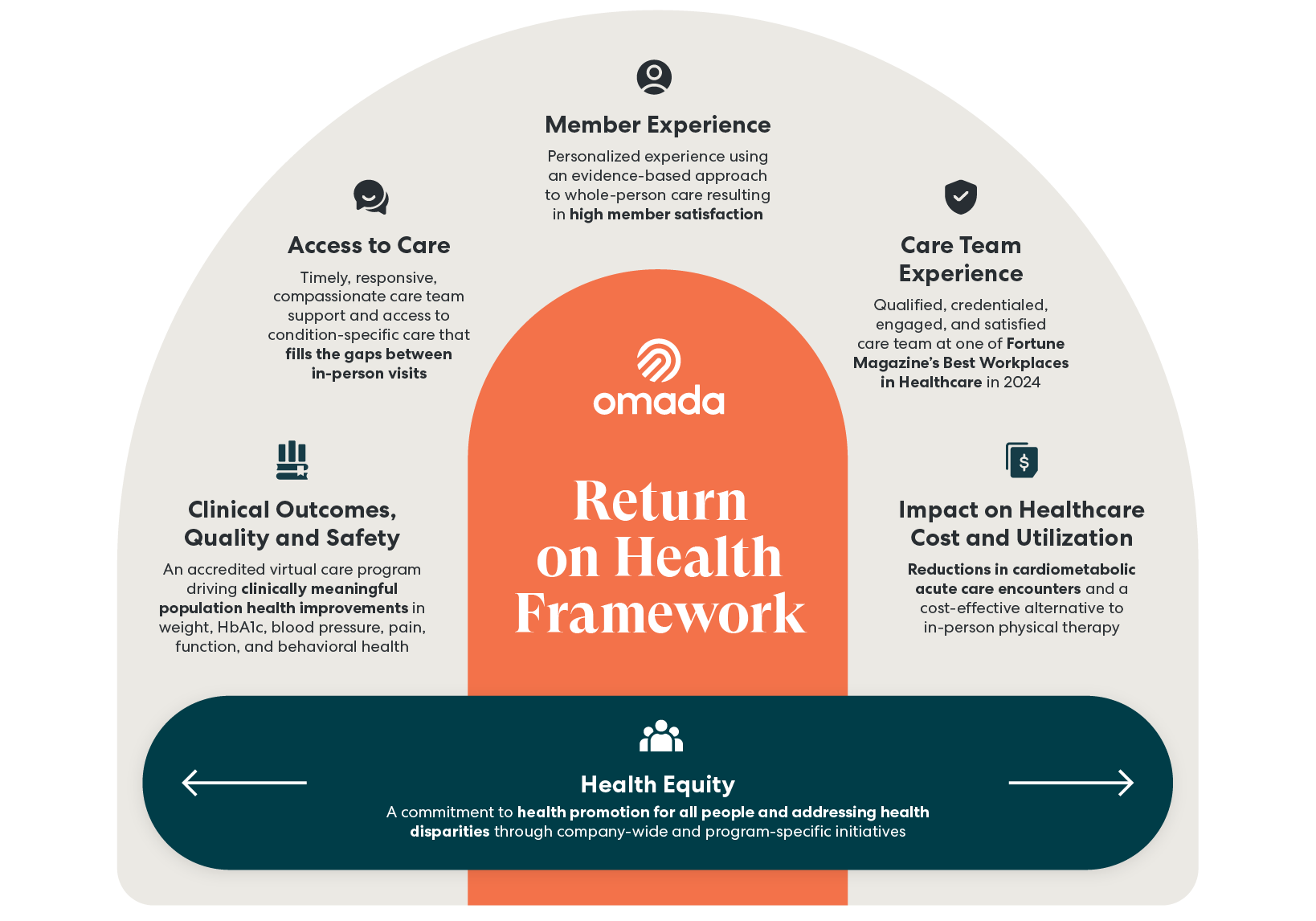
As the healthcare landscape shifts toward greater integration of virtual care solutions, it is increasingly important to articulate the Value on Investment (VOI) of virtual care. The American Medical Association (AMA) created the holistic Return on Health framework¹ to capture the broad value that virtual care programs may deliver to all relevant stakeholders, including patients, providers, payers, and society at large.
It was designed to provide standardized guidance for defining targets and objectives for health systems by improving patient care, enhancing population health, reducing costs, promoting provider well-being, and advancing health equity. As a multi-condition care provider for cardiometabolic and musculoskeletal (MSK) health, Omada Health is embracing the Return on Health framework to thoroughly articulate the value of care we provide and encouraging the virtual health industry to follow suit in service of establishing standardized industry expectations. Read our full VOI report here.