This edition covers:
- The newest oral GLP-1s on the market
- Clinical differences between oral and injectable GLP-1s
- How a growing range of options is re-shaping health benefit strategies
Last week, the FDA approved Lilly’s new oral GLP-1 medication, Foundayo™ (orforglipron), several months after the approval of Novo Nordisk’s Wegovy® (semaglutide) pill—the first oral GLP‑1 indicated both for weight management and for reducing cardiovascular risk in adults with obesity or overweight, and established heart disease.
Although oral GLP-1s aren’t entirely new—Rybelsus® has been used for diabetes since 2019—these advances raise important questions:

It’s too early to know. Patient behavior is notoriously difficult to predict, and few could have anticipated the widespread enthusiasm for injectable GLP‑1s or the cultural familiarity with terms like “GLP‑1.”
What I’ve learned over decades of direct patient care is that expanding therapeutic choice almost always improves engagement. When patients feel they have options, they’re more likely to start and stay with treatment.
I’ve had countless conversations with patients who were reluctant to start GLP-1 therapy because of injection anxiety, access challenges, or affordability concerns. While oral GLP-1s don’t solve all of these barriers, they do provide an option for my patients who refused to try injections.
As we step into a new, more accessible era of anti-obesity care, contributing to a sharper demand for GLP-1s and similar medications, it’s important that patients, providers and employers understand the key differences between formulations and how they impact health outcomes.
Key Differences Between Oral and Injectable GLP-1s
1. Route of administration and lifestyle fit
For patients, the biggest differences lie in how these medications fit into their current lifestyle and life stage:
- Oral GLP‑1s require daily dosing
- Injectables are once weekly but require needles
Roughly one in four adults has needle aversion, and oral options may open the door for patients previously unwilling or unable to use injectables. I’ve had patients outright refuse using any type of injectable, and I’ve also had patients reluctantly agree to try an injection after receiving education and coaching. Yet, even among these patients who initially hope they’ll “get used to it,” many don’t, and later disengage from treatment. I’m grateful to finally have effective oral options for these patients because they also deserve the highest quality care.
Of course, some patients don’t mind injections and may prefer a weekly dose for convenience, while others may favor a daily pill, especially if they already take other daily medications. Oral Wegovy must be taken 30 minutes before other meds, while Foundayo can be taken at any time of day.
Injectables require refrigeration, which may be challenging for patients without stable housing, privacy, or climate control. Oral options avoid these barriers and may be more convenient for frequent travelers. I have patients who travel who have told me that oral options aren’t just a preference, they’re a practical necessity.
2. Desired weight‑loss magnitude
I often talk to people who assume that the goal is always to lose a lot of weight as quickly as possible. Yet, this mindset leads to patients who struggle later with fatigue, excess muscle loss, or difficulty maintaining results. It’s important to set realistic and healthy goals with patients and then prescribe the most appropriate therapy and potency to the individual.
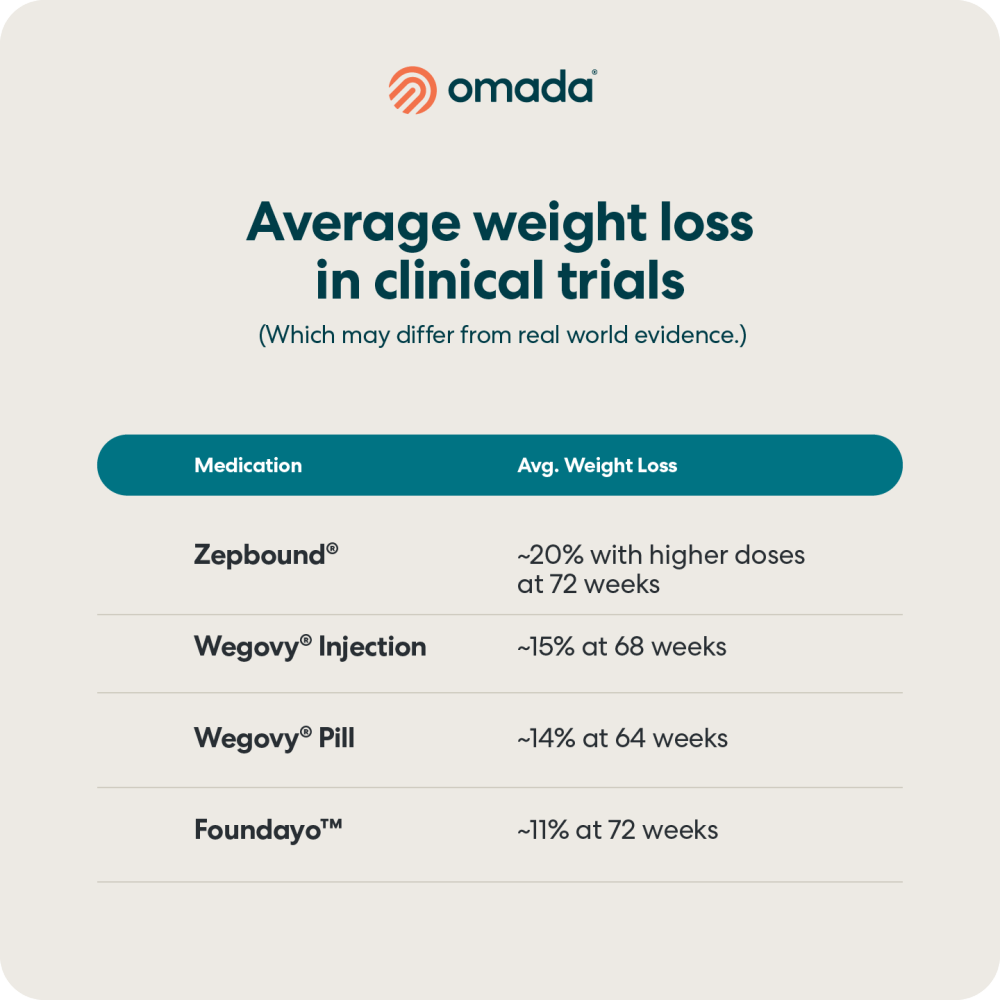
For example, if I have a patient who has a BMI of 42 and multiple comorbidities, I would lean towards Zepbound, since this patient would benefit from losing at least 20% of their body weight. For patients who have weight loss goals closer to 10-15%, the Wegovy pill may provide the right balance without excessive weight reduction.
I’m also increasingly mindful of sarcopenia risk. Older adults, sedentary patients, or individuals who lose weight very rapidly often do better with agents that produce more moderate weight loss, an area where emerging oral options may play an important role.
3. Long‑term use and discontinuation support
A common question I get from patients is whether or not they must remain on GLP‑1s indefinitely. While I believe that obesity is a chronic condition, real‑world data suggests that many patients cannot or do not wish to stay on long‑term therapy. This underscores the need for thoughtful discontinuation strategies tailored to the patient, which can be challenging without clear guidelines or guidance from robust research studies. From the literature we do have, we know that current approaches include:
- Gradually reducing the dose
- Extending injection intervals (e.g. to every two weeks)
- Transitioning to non‑GLP‑1 obesity medications
Example: A patient who reaches their goal weight on weekly Wegovy and wishes to stop injections can consider transitioning to the Wegovy pill or Foundayo, then slowly taper the dose while monitoring weight maintenance.
4. The presence of comorbidities
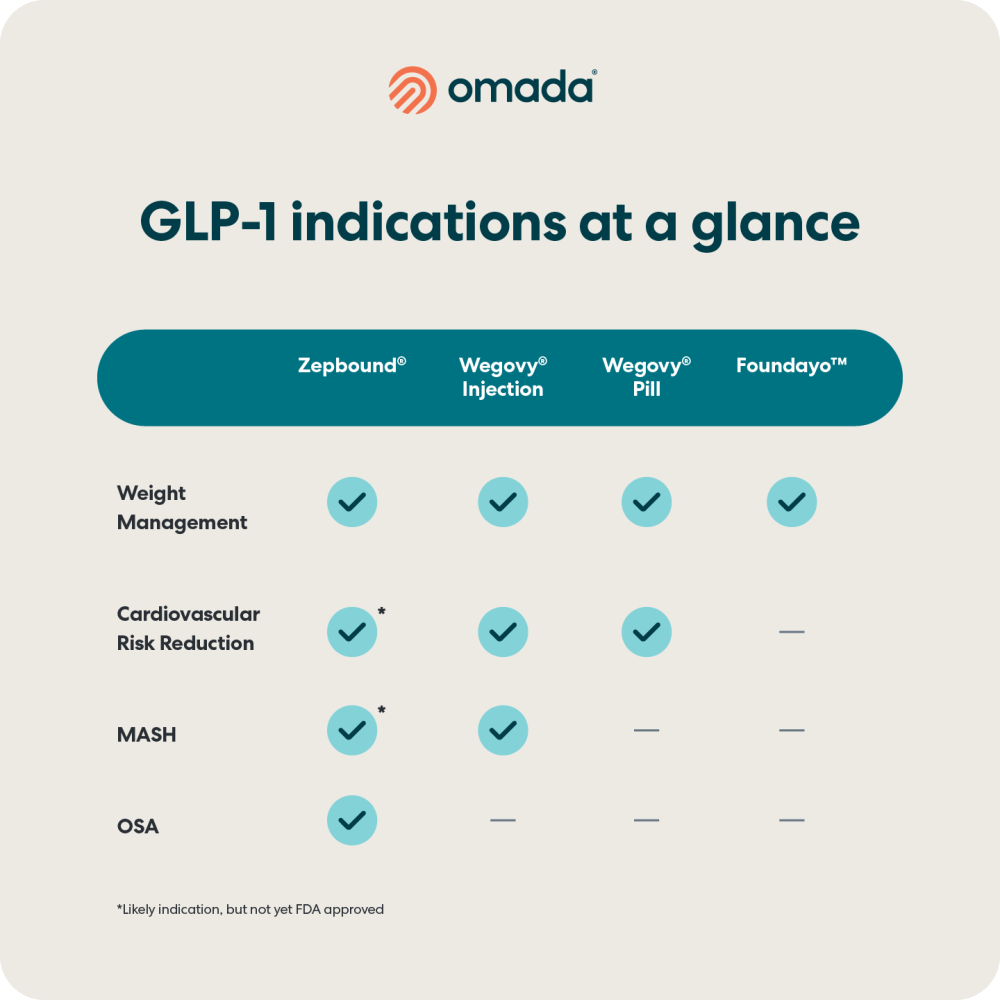
As we know, obesity is related to and a risk factor for a number of other cardiometabolic conditions, which means that many of my patients have multiple conditions that I need to be aware of and manage. Fortunately, GLP‑1 medications are now FDA-indicated for multiple indications beyond weight management and diabetes, including:
- Major cardiovascular event (heart attack and/or stroke) risk reduction in adults with cardiovascular disease and overweight or obesity
- Metabolic dysfunction–associated steatohepatitis (MASH)
- Moderate to severe obstructive sleep apnea (OSA) in adults with obesity
When one medication can address multiple conditions, it simplifies care and reduces polypharmacy.
Options Drive Individualized Care for Obesity
The GLP‑1 landscape is evolving rapidly, and 2026 will continue to bring an unprecedented range of options.
For benefits leaders sifting through the growing range of GLP-1 offerings, here are three considerations to shape your strategy:
- How can your GLP-1 benefits package reflect the diverse needs of your population?
- What tools do you need to streamline and implement these therapies for your people?
- Which digital health providers can you partner with to ensure proper adherence and health behaviors to meaningfully reduce the risk of chronic disease?
At Omada, we remain committed to guiding patients toward the medication and lifestyle approach that best supports their long‑term health, through flexible care plans and prescribing pathways.
As I look toward this next era of obesity care, I’m reminded of a patient early in my career—a man who avoided treatment for years because he simply couldn’t face injections. When he finally agreed to try, he said quietly, “I just wish there were a pill.” Oral GLP-1s now deliver on that wish. They are more than a new formulation, they are a new doorway.



