This edition covers:
- Clinical trials vs. real-world research
- Omada Insights Lab’s top takeaways of 2025
- How to effectively scale cardiometabolic care
Picture this: a world where cardiometabolic care becomes more about understanding our bodies rather than “fixing” them. This year, as the dust of the years-long GLP-1 boom started to settle (albeit gradually), an important narrative around obesity came into view:

As someone who spent 25 years as a clinical pharmacist, I've seen a lot of health innovations; but the rise of GLP-1s is truly something that has and may continue to transform the way we as a society approach our health.
We all know GLP-1s changed the game for obesity treatment, but there’s much more to come as pharmaceutical companies conduct clinical trials for additional indications. In recent years, the medications broke treatment barriers for a number of other chronic conditions. Let’s look at Zepbound’s approval for obstructive sleep apnea (OSA) —a condition where people stop breathing in their sleep. It’s estimated that OSA affects close to 30 million Americans, though many don’t even know it. Treatment options historically included hardware like CPAP machines or surgery. However, in 2024, Zepbound became the first medication ever approved to treat OSA.
Similarly, a liver condition called metabolic-associated steatohepatitis (MASH) did not have any FDA-approved medications until 2024. Then in 2025, Wegovy became the second medication approved for this condition. These approvals mark critical milestones, reinforcing the shift towards more diverse and innovative treatment strategies that are enticing to patients, broadening the scope of non-invasive options available to healthcare providers.
At Omada, we're not just observing this transformative phenomenon, we’re rolling up our sleeves and getting involved. Clinical trials and their resulting FDA-approvals continuously show the power and promise of GLP-1 medications, but how do patients actually fare in the real world?
In 2025, Omada Insights Lab’s ANSWERS Initiative set out to understand how GLP-1s drive outcomes in real-world settings, recognizing that insights drawn from clinical trials, while invaluable, often reflect idealized conditions that don't capture the complexities of everyday life. Knowing this, we examined how patients actually respond to GLP-1s amidst their unique daily challenges and routines, and needless to say, we learned a lot.
To wrap up an eventful year of GLP-1 research, here are Omada Insights Lab’s top takeaways of 2025, and what they mean for the future of cardiometabolic care.
GLP-1 Persistence is Challenging, But Critical to Outcomes
In 2025, we saw a lot of data showing that GLP-1 patients often stop taking their medications before reaching their goals. This happens for a number of reasons, including cost, lack of access, or side effects.
That said, a critical aspect of our work this year involved showing how lifestyle programs can support medication persistence by addressing key barriers and challenges associated with GLP-1 usage.
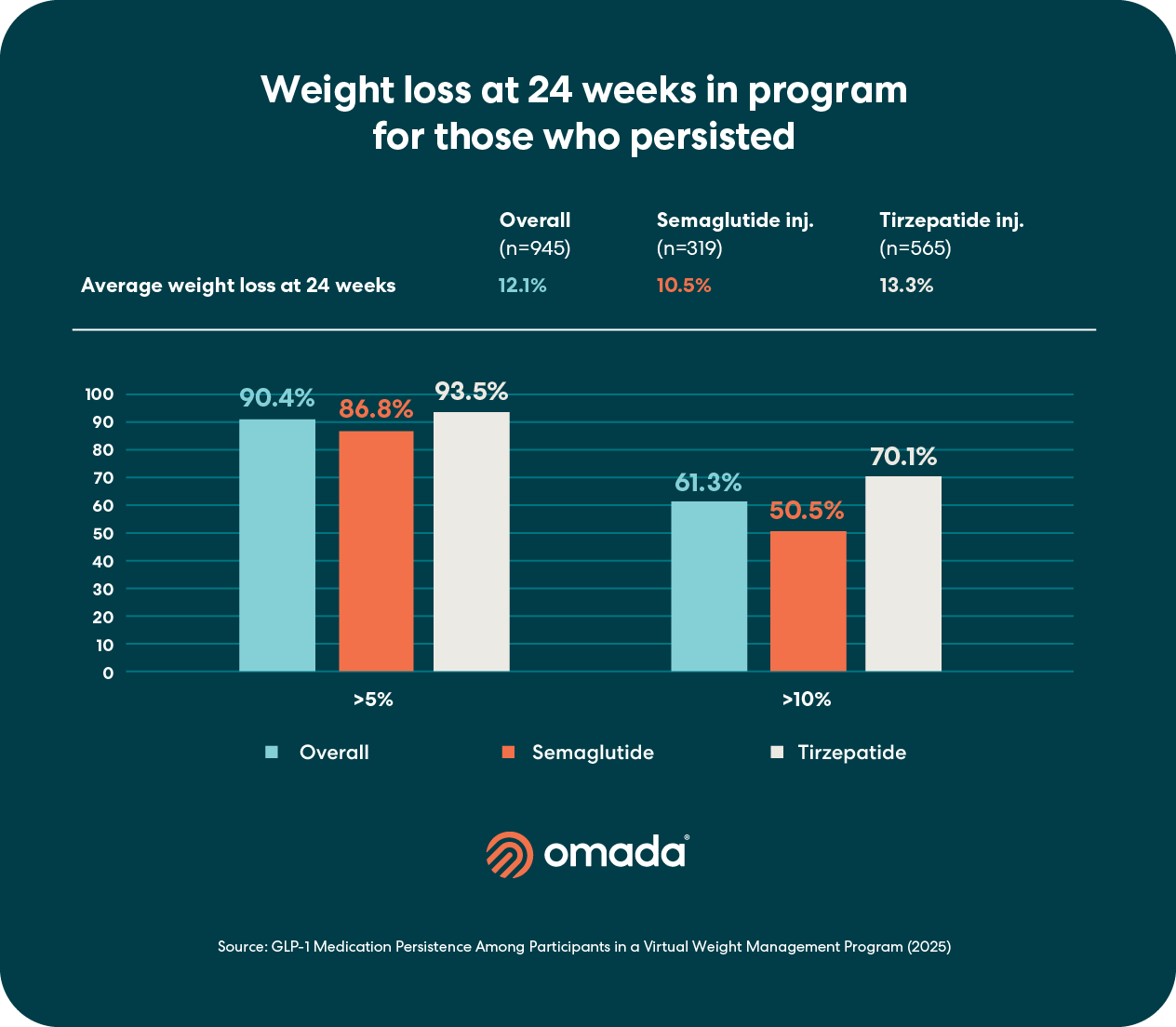
Omada Insights Lab analyzed engagement, medication persistence, and weight loss results for members in Omada’s Enhanced GLP-1 Care Track lifestyle behavior change program through 24 weeks.The findings indicated that:
- Members in Omada’s Enhanced GLP-1 Care Track showed higher average medication persistence rates through 24 weeks compared to other real-world evidence.
- Those who persisted saw an average of 11% weight loss with semaglutide, and 13% with tirzepatide, outcomes similar to what's been shown in clinical trials.
- Providing the right kind of lifestyle behavior change support to enable GLP-1 persistence long enough to see benefits can help members achieve clinical trial-level weight loss, setting the stage for cardiometabolic disease risk reduction.
Healthcare providers must facilitate supportive spaces where each individual feels heard and understood, enabling them to reach their personal health milestones. This journey goes beyond just hitting numbers on a scale; it’s about empowering people with the confidence and tools they need for lasting health improvements.
Patients Can Maintain Their Weight Loss After GLP-1s With Ongoing Support
Some of the most common questions asked about GLP-1s are, “is weight regain post-GLP-1s inevitable?” “How can we help people keep the weight off after GLP-1 discontinuation?” And “what does the real-world evidence show?” In my conversations with benefits leaders across the country, these questions are at the forefront of their minds.
They fear that if individuals regain the weight post-GLP-1, not only will they have spent significant resources in vain, but the weight may return in a less-healthy manner, potentially leaving individuals in a worse clinical state than before. These challenges make the decision-making process around GLP-1s complex. However, our research sought to address these issues by demonstrating that with proper support, maintaining weight loss after discontinuation is indeed achievable.
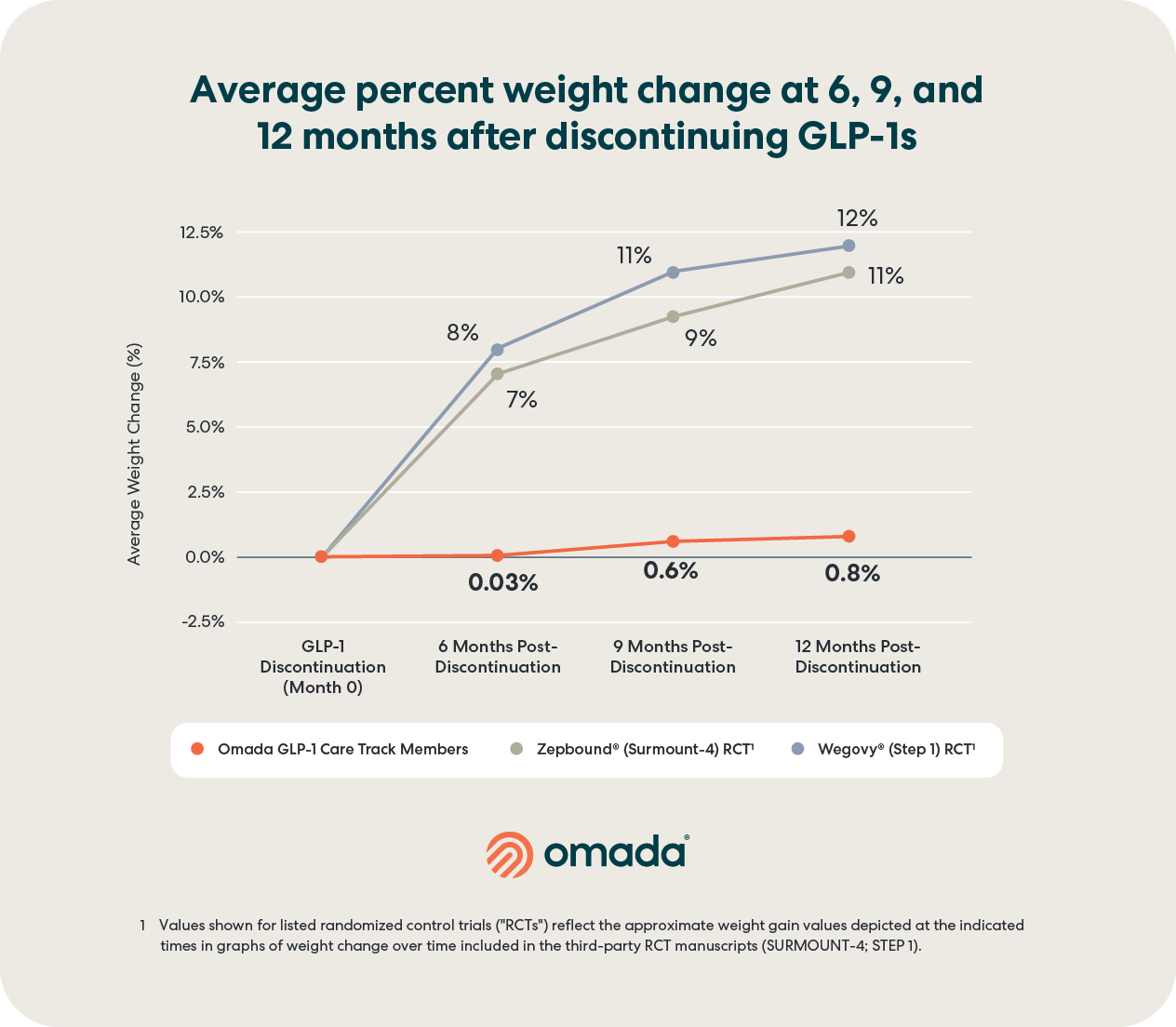
To do so, Omada Insights Lab analyzed weight change up to one year after GLP-1 discontinuation. The sample included 816 members without diabetes enrolled in Omada’s Prevention & Weight Health and Hypertension programs who were taking GLP-1s for weight loss. The analysis found that:
- At 12 months, Omada members largely maintained their weight after GLP-1 discontinuation, with an average 0.8% weight change
- At 12 months, 63.2% of members maintained or continued to lose weight.
Why is this important?
The significance of maintaining weight loss post-GLP-1 extends beyond the initial health benefits; it's about ensuring long-term success and value. For employers and plan sponsors, investment in these medications is more than a financial commitment, it's an investment in the holistic well-being of their workforce.
When weight is regained, it not only interrupts the trajectory of improved health outcomes, it also undermines value on investment. Supporting patients with effective resources, such as virtual lifestyle support programs, ensures the continuity of the patients’ health journey.
For patients themselves, it's about empowerment and peace of mind. Overcoming weight management hurdles is challenging enough, and many people using GLP-1s value the possibility of sustaining their progress without dependency on medication. By prioritizing sustainable weight maintenance, we pave the way for lasting health improvements and a stronger return on investment.
“Eat healthy and Exercise” is Not Sufficient Guidance for People Taking GLP-1s
While the spotlight on GLP-1s often centers on rapid weight loss, we can’t ignore the rapid decline of muscle mass that comes with it. GLP-1 studies show significant lean body mass reduction ranging between 15% and 60%. Rapid weight loss can, in fact, carry significant risks, even beyond the loss of lean muscle mass, including nutritional deficiencies, and a slower metabolism, which can ultimately undermine long-term health objectives. At the same time, GLP-1 prescribing information remains vague when it comes to exercise, e.g. “indicated in combination with increased physical activity” or “as an adjunct to diet and exercise."
Knowing this, Omada Insights Lab is currently researching changes in body composition and muscle mass retention in our GLP-1 Enhanced Care Track population to learn more about this phenomenon, and what type of interventions might mitigate these risks.
Obesity has a very specific impact on the entire musculoskeletal system, including diminished tendon health, impaired muscle function and joint degradation. Given these facts, it’s not enough to simply tell patients to “eat healthy and exercise” while on a GLP-1 regimen.
Our goal for members taking GLP-1s is to preserve lean muscle mass through condition-specific training while reducing the risk of weight regain as fat, and enhancing both physical and metabolic health.
We believe that this approach not only supports healthier weight management but also fosters overall wellness. We're excited to be at the forefront of research in this area, assessing the impact of our program on lean muscle preservation and providing recommendations based on our real-world experience. This research aims to provide robust data that underscores the importance of a balanced GLP-1 journey, where the focus is as much on quality as it is on quantity. By leading with innovation and evidence-based practices, Omada continues to promote what it means to achieve healthy and lasting weight loss.
Staying Curious is Key to Cardiometabolic Care Innovation
We’re talking about a support system that helps manage side effects, encourages healthy and sustainable habits, and offers advice that's tailored to individual needs and goals. By weaving in elements of behavioral support, social networks, and new technology, a nurturing environment is what genuinely helps people hit their health targets.
At Omada, we have shown how a seamless integration of GLP-1s with behavioral coaching and cutting-edge digital tools can set new standards in patient care. But this is just the beginning. We are continuously refining and evolving these models, using real-world evidence and member feedback as our compass. By being agile, we can adapt to new knowledge and technologies that further enhance patient outcomes.
As we continue this journey, we're naturally curious about what lies ahead. The realm of GLP-1s and emerging therapies with novel mechanisms holds untapped potential including groundbreaking new indications and how they might address an even wider spectrum of health challenges.
At the same time, the conversation must shift from "if" to "how" these medications can be responsibly and sustainably integrated into care models. This is not just about medication availability but about scaling a holistic healthcare approach that addresses each patient's unique needs.
The journey with GLP-1s is just beginning, and the potential is huge. We're excited by the opportunity to harness these medications as more than just treatments; they're a chance to innovate how we approach healthcare. By sharing outcomes, questioning what we've always done, and truly listening to our patients and providers, we can make these programs even better.
Our goal is simple: go beyond the medication to deliver real value. If we continue to push ourselves and embrace these changes, we can make our communities healthier and happier. Together, we can genuinely make a difference in population health.
Read more from Omada Insights Lab here



